

Dubai Metro Blue Line Passes 29% Complete, With Gold Class Trains and a 2029 Opening Date: What It Means for Founders in the East of the City
Sheikh Hamdan has reviewed the Dubai Metro Blue Line, now 29% complete and still due to open on 9 September 2029. The RTA showed the new train design, with Gold Class seats and wireless charging, plus AI-driven track inspection and a new rail systems lab. Here is the route, the progress figures, and what the line could mean for founders who live and work in Mirdif, Silicon Oasis, Academic City, Fe
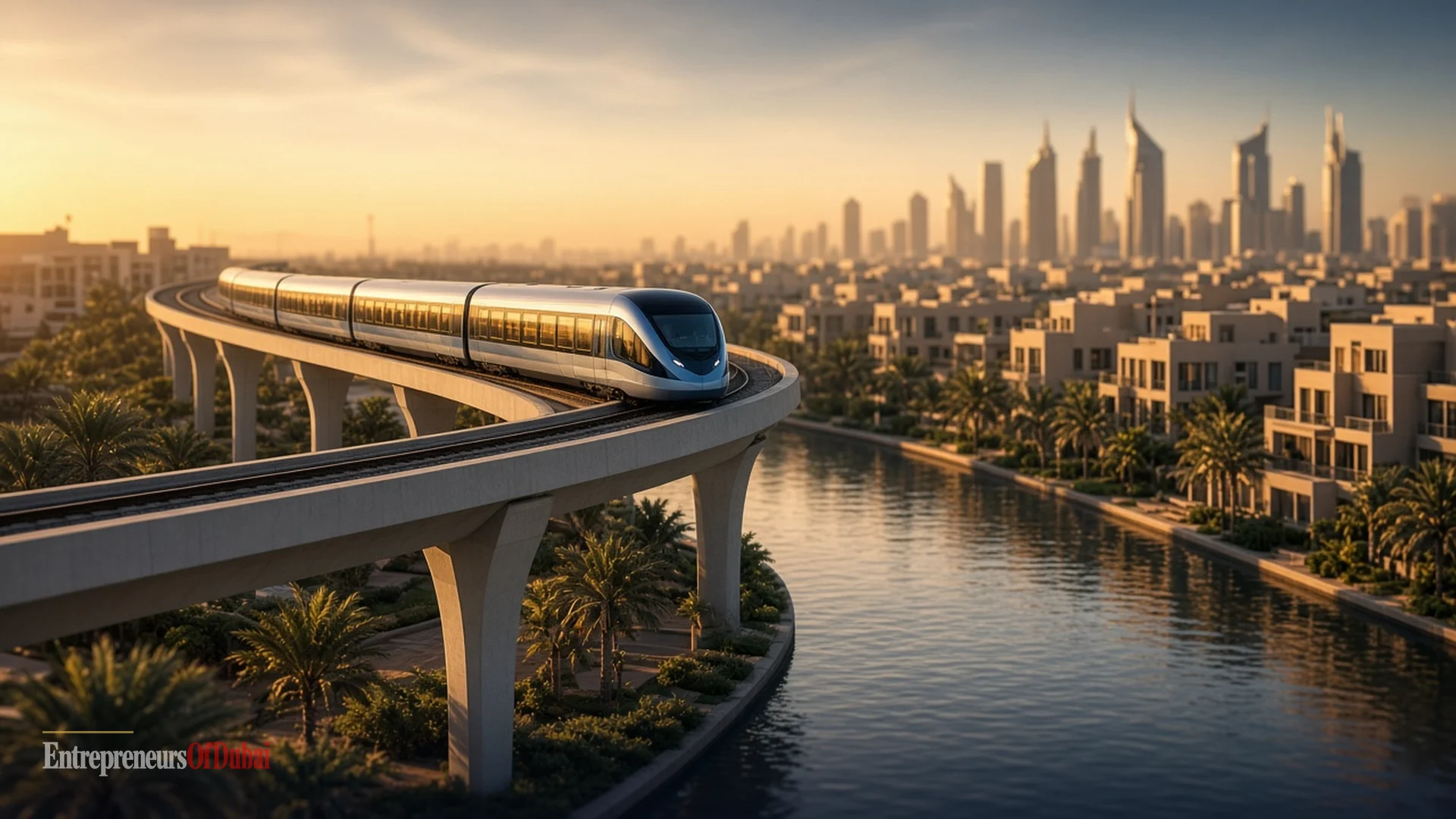
DUBAI — The east of Dubai is a step closer to getting its own Metro line, and the trains that will run on it now have a face.
Sheikh Hamdan bin Mohammed bin Rashid Al Maktoum, Crown Prince of Dubai, reviewed progress on the Dubai Metro Blue Line at the project site in Dubai Festival City on Sunday, 22 November. Overall construction has reached 29%, and the line remains scheduled to open on 9 September 2029, Gulf News reported.
“Work is gathering pace ahead of the scheduled opening on 9 September 2029,” Sheikh Hamdan said in a post quoted by Khaleej Times. More than 14,000 workers, engineers and supervisors have put in over 33 million working hours so far.
Where the Line Will Go
The Blue Line runs for 30 km, with 15.5 km underground and 14.5 km above ground, and has 14 stations, according to the Dubai Media Office account carried by Aletihad. It has two branches that meet at International City 1, Gulf News explains in its route guide:
- Creek branch (21 km, 10 stations): from Creek Interchange in Al Jaddaf, linking to the Green Line, through Dubai Festival City, Dubai Creek Harbour, Ras Al Khor, three International City stations, Dubai Silicon Oasis and Dubai Academic City.
- Centrepoint branch (9 km, 4 stations): from Centrepoint Interchange in Al Rashidiya, linking to the Red Line, through Mirdif and Al Warqa to International City 1.
The Dubai Creek Harbour stop, also called Emaar Properties Station, will stand 74 metres tall, which Gulf News describes as the world’s tallest Metro station. International City 1 will cover more than 44,000 square metres and is designed for up to 350,000 passengers a day.
Progress So Far
The Roads and Transport Authority (RTA) gave these figures, as reported by Aletihad and Gulf News:
- Underground stations: 32%
- Tunnel excavation: 55%
- Elevated stations: 16%
- Bridge works: 17%
- Bridge piers: 62%
A 1.3 km bridge will carry the line across Dubai Creek, the Metro’s first crossing over the water. It is being built from precast concrete segments placed from completed piers, so that boat traffic can keep moving during construction. The project is being delivered by the MAPA–LIMAK–CRRC consortium, Aletihad notes.
What the Trains Will Offer
The new trains have a design capacity of 675 passengers per journey and a total capacity of 1,246. Inside there will be three types of carriage: Gold Class, Silver Class and a carriage for women and children.
Gold Class will have contemporary seating, wireless chargers for phones, digital screens and lighting that adjusts automatically. Cameras on the trains will detect obstacles on the track and count passengers, so the RTA can track crowding in real time. Station interiors will follow five design concepts: the Creek Harbour gateway design and four based on water, air, fire and earth.
AI on the Tracks and a New Test Lab
The RTA also showed two technology projects:
- ARIIS, an automated rail inspection system that uses LiDAR and AI to spot defects. Its targets include cutting inspection time by 80% and resources by 50%.
- A research and development centre with CASCO Signal, which will house what the RTA calls the Middle East’s first train systems development laboratory. It aims to cut testing time by 85% and lift punctuality accuracy to more than 99.7%.
These are targets set by the RTA, not results yet.
What It Means for Founders
1. Office and home decisions in the east. Silicon Oasis, Academic City, Festival City and Creek Harbour host many startups, universities and growing residential communities. A direct Metro link from 2029 could widen the pool of staff who can reach you without a car. If you are signing a long lease in these areas, the opening date is worth factoring in.
2. Commuting costs for teams. For staff in Mirdif, Al Warqa or International City, a Metro option could reduce reliance on taxis and parking. That matters when you set salaries and allowances.
3. Foot traffic around stations. The project supports the Dubai 2040 Urban Master Plan, which encourages development around stations, according to Aletihad. Cafés, gyms, clinics and convenience retail near future stops may benefit, though the line is still almost three years away.
4. Payments are already changing. Sheikh Hamdan was also briefed on the nol system, including account-based ticketing and the new nol–Jaywan cards, Gulf News reports. See our explainer on the nol–Jaywan card.
5. One piece of a bigger network. The Blue Line sits alongside other planned rail projects, including the Metro extension to Al Maktoum International Airport that we covered here.
The Bottom Line
The Blue Line is not a 2027 story. It is a 2029 one, and construction is just under a third done. But the route is fixed, the trains are designed and the opening date has not moved. For founders choosing where to base a team or open a shop in the east of Dubai, that is useful information to have now.
Figures are from the RTA and Dubai Media Office as reported by Gulf News, Khaleej Times and Aletihad on 22 November. Performance figures for ARIIS and the CASCO laboratory are targets.