

Dubai Approves a Dh2 Billion Metro Link to Al Maktoum Airport and a New Property Study: What Founders Should Take From It
Dubai's Executive Council has approved a 3-kilometre Metro extension to Al Maktoum International Airport City, due in 2031, and a Dubai Land Department study that puts office occupancy at 94% and projects 365,000 new homes by 2030. Here is what was approved and what it means for founders planning where to locate, hire and sell.
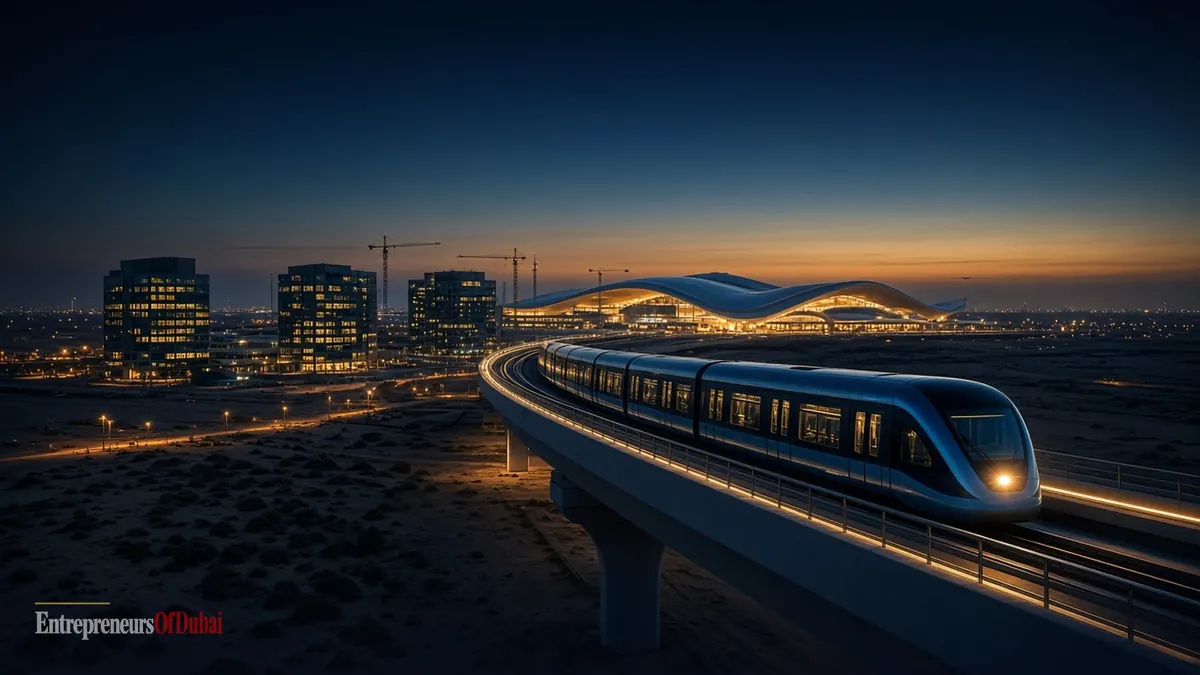
DUBAI — Dubai’s Executive Council has approved an AED 2 billion extension of the Dubai Metro to Al Maktoum International Airport City, along with a Dubai Land Department study on the future of the property market and an AED 9.59 billion plan for community services through 2040, according to the office of Sheikh Hamdan bin Mohammed, Crown Prince of Dubai and Chairman of the Executive Council.
The decisions, taken on 10 November during the UAE Annual Government Meetings 2026, were part of a package of public projects worth more than AED 11 billion. For founders, two parts stand out: a firm date for rail access to the city’s next major airport, and new official numbers on how full Dubai’s homes, shops and offices are.
The Metro Extension
According to the official announcement:
- The extension adds a 3-kilometre route with two new stations, linking Route 2020 to Al Maktoum International Airport City.
- It will connect to the airport’s West Terminal, the airport express line and Etihad Rail’s high-speed rail network.
- The Roads and Transport Authority (RTA) and Dubai Engineering Projects Establishment will deliver it, with services scheduled to begin in 2031.
“Al Maktoum International Airport City is one of our most significant strategic projects, reinforcing Dubai’s position as a global aviation hub,” Sheikh Hamdan said.
The station locations and journey times have not yet been published, Gulf News noted. Those details will decide how useful the link is for any particular office or neighbourhood.
What the Property Study Says
The Dubai Land Department study, approved at the same meeting, gives a rare official snapshot of occupancy across the emirate:
- Residential occupancy: 97%
- Retail occupancy: 98%
- Office occupancy: 94%
It also projects 365,000 new residential units and about 1.1 million square metres of office and retail space by 2030. The study supports the Dubai Real Estate Sector Strategy 2033, which aims to double the sector’s GDP contribution to AED 73 billion and lift the market’s total transaction value to AED 1 trillion.
Community Services Through 2040
The AED 9.59 billion community services plan will roll out in phases under the Supreme Committee for Urban Planning, with priority for residential areas for UAE citizens. It covers safety, security, healthcare, education and sports facilities, plus amenities for senior Emiratis and family spaces. No specific facilities or budgets have been announced for individual districts.
Why Dubai South Matters
Dubai South, the district around the airport, has been drawing businesses. A July report from W Capital Real Estate Brokerage, cited by Gulf News, said the area had added 653 new companies in the previous year, taking it to more than 4,200 operating businesses.
“Knowing the metro will be in place before the airport opens gives developers, airlines, logistics players and hospitality operators the confidence to commit to the airport city,” Joseph Salem, Partner at Arthur D. Little, told Gulf News.
What It Means for Founders
1. Office space is tight. At 94% office occupancy and 98% retail occupancy, landlords have the upper hand. If your lease is up in the next year, start talking early, and consider flexible or co-working space while you wait for the new supply the study projects by 2030.
2. Plan your location around 2031. If you run logistics, aviation services, hospitality or e-commerce fulfilment, a confirmed rail link to the airport city makes Dubai South easier to staff. Staff without cars will be able to reach work by Metro once it opens. Watch for the station locations before signing anything long term.
3. Sell to the build-out. 365,000 new homes and over a million square metres of commercial space by 2030 means years of work for fit-out firms, building-tech startups, property managers, facility services and home-services businesses.
4. Hiring will follow transport. Areas that gain Metro access often become easier places to recruit. Founders choosing between districts should factor in where their staff can live affordably and commute by public transport.
5. Government planning is a free signal. The DLD study is meant to guide developers and policy. Founders can use the same numbers to size markets, pick neighbourhoods and time expansion.
The Bottom Line
The Dh2 billion Metro link gives the Al Maktoum airport city a firm transport date, and the DLD study confirms that Dubai’s homes, shops and offices are close to full. For founders, that means planning for tight space now and new opportunities around the airport and new communities over the next five years.