

IEA Says the UAE Will Lead the World in Solar Power Per Person by 2031: Where the Opportunities Are for Founders
The International Energy Agency's Renewables 2026 report projects the UAE will become the world's largest generator of solar electricity per person by 2031, at more than 4,000 kWh each. Here is what the forecast says and where founders in energy, property and software can find work.
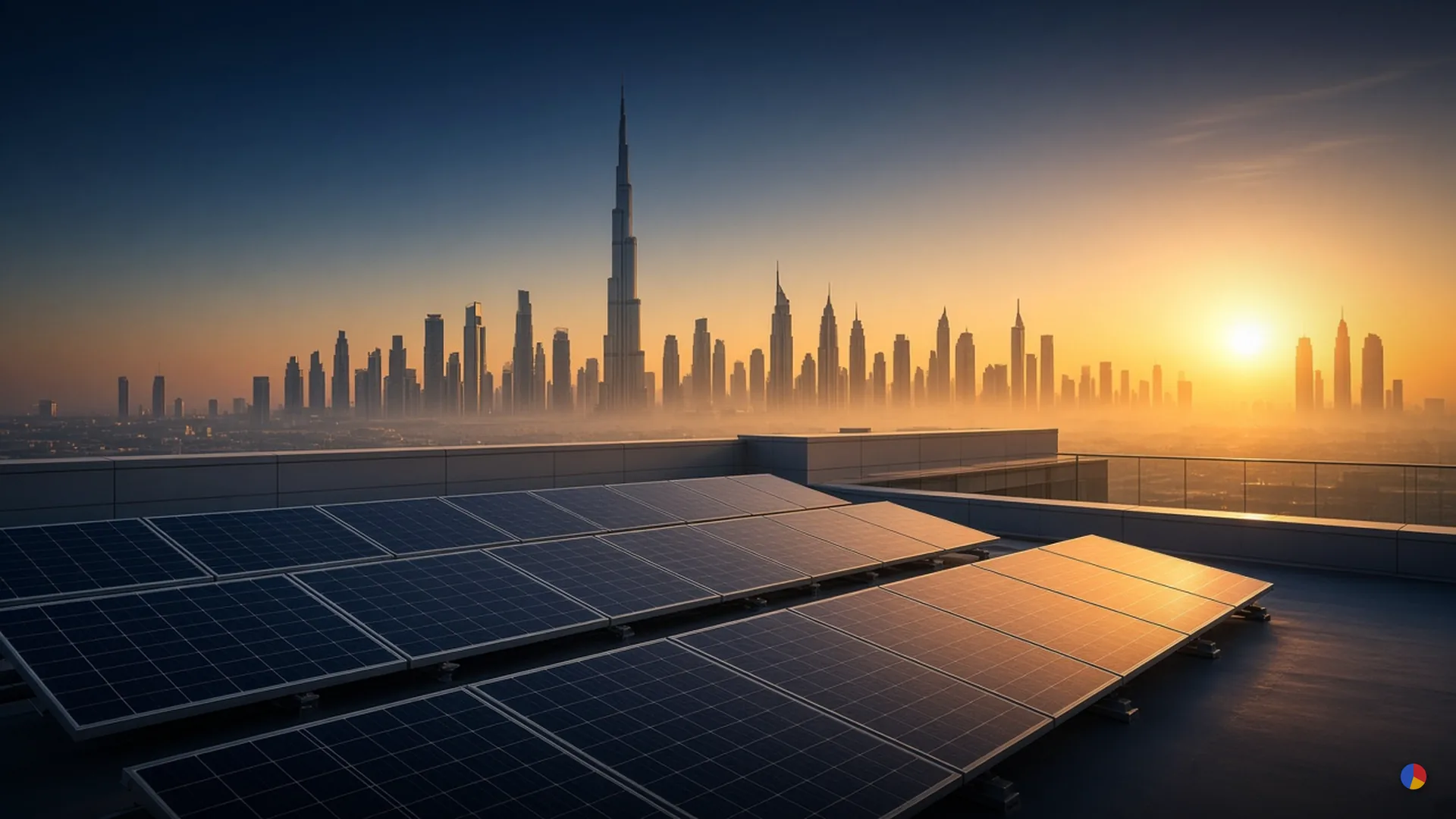
DUBAI — The UAE is on track to generate more solar electricity per person than any other country by 2031, according to the International Energy Agency. Its Renewables 2026 report, published on 6 November, projects that the UAE will become “the largest generator of solar PV per capita worldwide” over the forecast period.
The National reported that the IEA puts UAE output at more than 4,000 kilowatt-hours per person by 2031, against a global average of about 800 kWh. That is a per-person measure, not a ranking of total national output. Still, it shows how central solar is becoming to the UAE’s power system, and that creates work for founders.
What the IEA Forecast Says
From the full report and the IEA’s announcement:
- A new global leader. Today’s leaders in solar output per person include Australia, the UAE, the Netherlands, Greece and Spain, all well above 1,200 kWh per person in recent years. By 2031 the IEA expects the UAE to be first, with Oman and Bulgaria rising into the top group.
- Gulf neighbours in the top 10. The National reported that Oman ranks third and Qatar fifth in the 2031 projection, with Australia second and Bulgaria fourth.
- Regional acceleration. In the Middle East and North Africa, Saudi Arabia is set to expand renewables fivefold between 2026 and 2031, “followed by the United Arab Emirates, marking a structural step-change in the region’s energy market,” the report says.
- A global boom led by solar. Worldwide renewable capacity is forecast to grow by almost 4,800 gigawatts from 2026 to 2031, nearly 60% more than in the previous six years. Solar PV accounts for more than three-quarters of that growth.
The IEA says energy security is now the main driver. “Today, it’s mainly energy security that is driving renewables’ expansion as more and more countries seek to reduce their exposure to imported fuels,” said IEA Executive Director Fatih Birol.
The UAE Policy Backdrop
The National noted that Energy and Infrastructure Minister Suhail Al Mazrouei said in September that the UAE had raised its clean energy target, which covers renewables and nuclear, to 35% by 2030 to 2031. He said meeting it will require new projects, stronger competition and broader opportunities for the private sector in power generation.
In Dubai, the private sector already plays a role through rooftop solar. DEWA’s Shams Dubai programme had connected more than 725 megawatts of rooftop capacity across more than 8,430 buildings as of mid-2025, Zawya reported. DEWA said in 2026 that use of Hab-Reeh, its online tool for checking solar system designs, rose 17% in the first half of the year compared with the same period in 2025.
Where Founders Fit
The IEA report points to several areas where demand should grow alongside large solar projects:
1. Rooftop and commercial solar. The IEA says households and small businesses worldwide are turning to rooftop solar that can be installed quickly, improving electricity services for about 70 million households. In Dubai, installers, designers, financiers and maintenance firms all work within the Shams Dubai framework.
2. Storage and flexibility. The report calls battery storage “an important way to increase the flexibility of electricity systems rapidly” and says flexible demand measures “can be implemented quickly”. Software that shifts building, cooling or EV charging loads to sunny hours fits that need.
3. Grid and connection services. The IEA says advanced-stage renewable and storage projects waiting for grid connections worldwide rose 60% in a year to 3,000 GW. Firms that speed up studies, permitting and connections are solving one of the sector’s biggest bottlenecks.
4. AI for energy. The report says digital technologies, including artificial intelligence, “can help shift demand towards periods when renewable power supply is abundant.” For UAE AI startups, energy is a sector with clear problems and measurable returns.
5. Your own power bill. Founders with warehouses, factories or large rooftops do not need to be in climate tech to benefit. Getting a rooftop solar quote is a practical cost decision, especially as businesses face rising operating costs.
The Bottom Line
The IEA headline is about solar output per person, but the bigger message is that the UAE’s power system is moving decisively toward solar, backed by national targets and a regional build-out the agency calls a “structural step-change”. Much of the money will go to large developers and utilities. Founders who build the installation, storage, software and services around those projects have a growing market to sell into.