

Dubai Launches a UAE-China Smart Transport Centre at EV World: What Mobility and Charging Founders Should Know
A new year-round UAE-China Smart Transport Centre will connect Chinese EV and autonomous-mobility makers with UAE regulators, fleets, charging networks and investors, and back pilots in robotaxis, autonomous logistics and charging. Here is how it works and where the openings are for local founders.
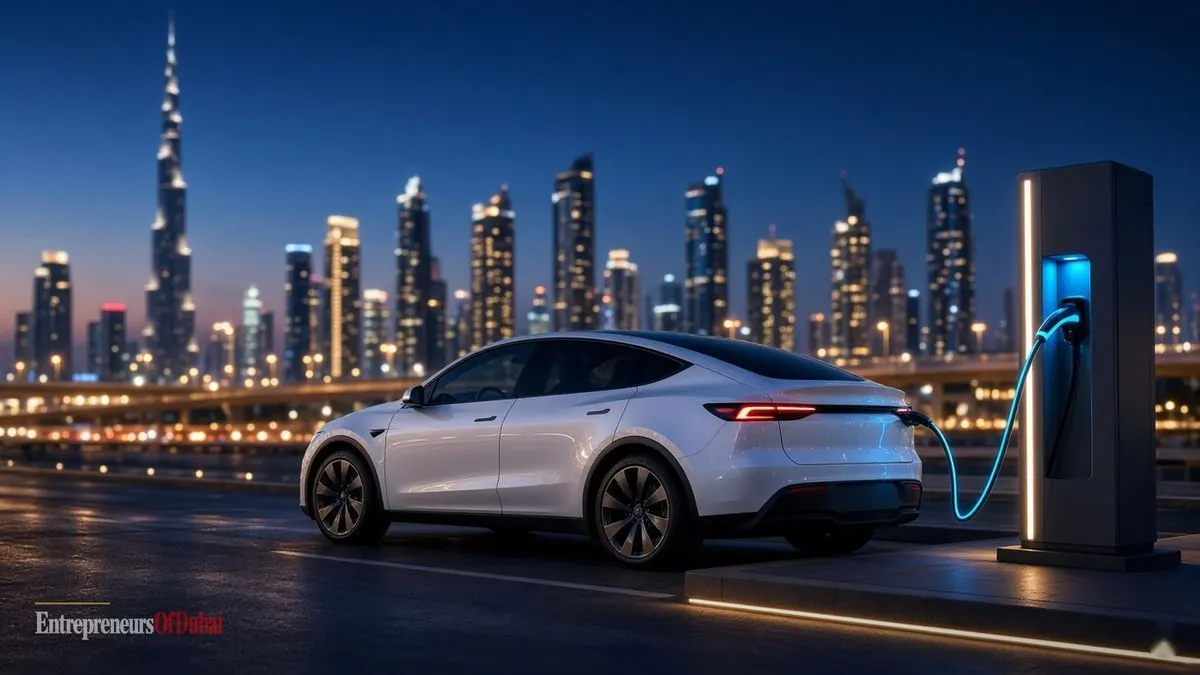
DUBAI — Dubai has a new standing channel between Chinese electric-vehicle companies and the UAE market. The UAE-China Smart Transport Centre was launched on 11 November at the UAE-China Industrial Cooperation Forum on green and smart mobility, held during the Dubai International Electric Vehicle Exhibition and Conference 2026 (EV World 2026) at Dubai World Trade Centre, Gulf Today reported, citing state news agency WAM.
The centre is described as a year-round platform to turn conversations at the show into “tangible projects, investments and business opportunities.” For founders working in fleets, charging, energy or autonomous driving, it is worth understanding now, while the exhibition wraps up today.
What Was Announced
Dawood Al Shezawi, President of EV World 2026, announced the centre at the forum. He said it was set up in response to proposals from government entities and Chinese companies during a meeting on the sidelines of the exhibition’s first day. Participants had asked for clear routes to licences and approvals, vehicles that work with local charging networks, local partners for service and skills, and continued contact with decision-makers after the event ends.
The centre will run three tracks, according to the report:
- A single point of access to help Chinese companies deal with the relevant authorities and understand rules on licensing, vehicle certification, safety standards and charging requirements.
- Regular matchmaking that connects Chinese vehicle and technology makers with UAE fleet operators, charging-network providers, industrial partners and investors throughout the year.
- Support for pilot projects in autonomous taxis, autonomous logistics, charging and energy, so companies can test solutions, scale deployment in the UAE and prepare for wider regional entry.
Al Shezawi stressed that the centre will not be a conventional headquarters but an “institutional framework” to keep cooperation going between editions of the show. Progress will be reviewed at the next EV World.
The Event Behind It
EV World 2026 is the first edition of the show. It is organised by Dubai’s Roads and Transport Authority (RTA) with China EV100 and runs from 10 to 12 November, Gulf News reported. More than 300 authorities, companies and organisations are taking part, along with around 120 speakers. When it announced the event in February, the RTA said it expected more than 10,000 specialist visitors.
On the show floor, the RTA is displaying electric buses, electric delivery motorcycles with battery-swapping stations, the electric abra and its autonomous taxi project, according to Gulf News.
Why China Matters Here
The trade numbers explain the push. Al Shezawi said non-oil trade between the UAE and China passed $100 billion for the first time last year, growing 24.5%. China is the UAE’s largest trading partner, and the UAE is China’s leading Arab trading partner in non-oil goods.
He also pointed to Dubai’s target of converting its entire taxi and limousine fleet to electric and hydrogen-powered vehicles by 2040, and said the next phase of cooperation should move beyond trade into practical projects in transport, charging networks, ports and aviation.
What It Means for Founders
1. Chinese makers will be looking for local partners. The matchmaking track is built to connect manufacturers with fleets, charging providers and service partners. Founders who run charging installation, fleet software, EV maintenance, insurance, financing or driver training are the kind of local partner these companies say they need. Get on the radar early.
2. Compatibility is a business in itself. Participants flagged making vehicles work with local charging networks as a pain point. Startups that help with homologation, charger interoperability, payment integration or energy management at depots can sell into both Chinese entrants and UAE fleet operators.
3. Pilots are where the real deals start. The third track backs trials in robotaxis, autonomous logistics and charging. If you build software for routing, remote monitoring, safety data or last-mile delivery, ask how to join a pilot as a technology or operations partner rather than waiting for a tender.
4. Fleet operators have a long runway to plan for. Dubai’s 2040 target for taxis and limousines, plus the RTA’s push on electric delivery motorcycles, means fleet owners will be comparing vehicles, financing and charging options for years. Founders who help small fleets make that switch without hurting their cash flow have a clear market.
5. Watch the details as they come out. The announcement did not say who will run the centre day to day, how companies apply, or what budget sits behind the pilots. Follow the RTA and EV World channels for the sign-up process before you build a plan around it.
The Bottom Line
The UAE-China Smart Transport Centre is less a building than a promise of ongoing access: to regulators for Chinese manufacturers, and to those manufacturers for UAE fleets, charging firms and investors. For local mobility founders, the opportunity is to become the partner that helps new vehicles and technologies actually work on Dubai’s roads.