

A Concrete Supplier Backs a Dubai 3D-Printing Startup: What AC3D's Round Says About Construction Tech
UAE construction 3D-printing company AC3D has taken a strategic investment from ready-mix producer Transgulf Readymix, joining DIEZ's Oraseya Capital in a $3 million late-seed round it aims to close by year-end. Here is what was announced, the rules behind Dubai's 3D-printing push, and what proptech and construction founders can take from it.
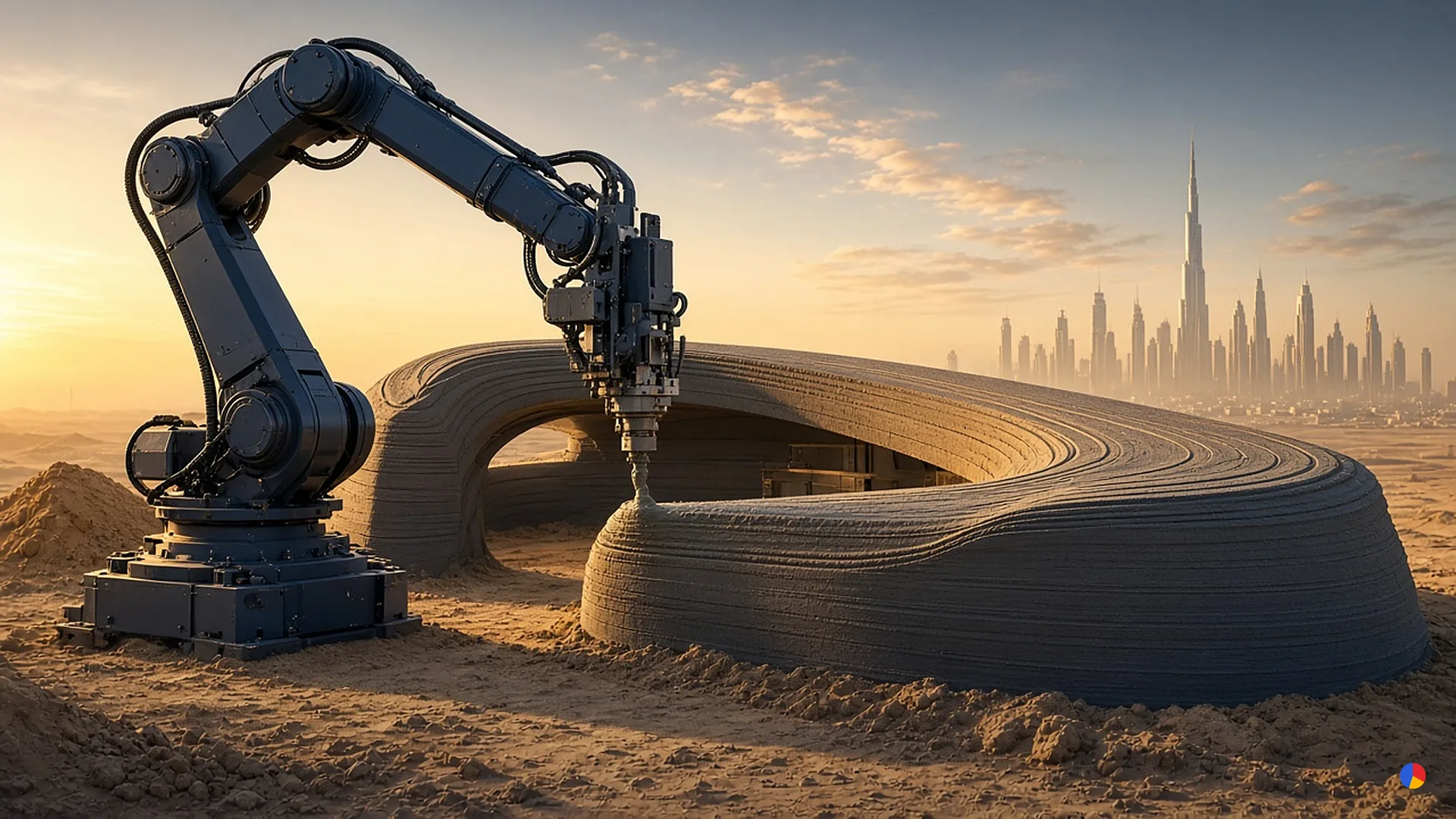
DUBAI — A UAE company that prints buildings has found a backer that makes the concrete. AC3D, a construction 3D-printing company operating from the UAE, says Transgulf Readymix has made a strategic investment in its ongoing $3 million late-seed round, according to a press release published on Zawya. Dealroom reported the deal on October 30.
Transgulf joins Oraseya Capital, the venture fund of the Dubai Integrated Economic Zones Authority (DIEZ), which invested earlier in the round. AC3D says it aims to complete the round by the end of 2026, so the raise is still open. The size of each investor’s cheque was not disclosed.
What Was Announced
The two companies describe the deal as a partnership, not just a funding round. According to the release, they plan to work together on optimised 3D-printable concrete, project development and commercial roll-out across the GCC.
Transgulf, founded in 1997, operates across Dubai and Abu Dhabi. It has developed a 3D-printing concrete mix, TG TABS, and is licensed to manufacture it.
“Transgulf brings far more than capital. Its materials expertise, production capabilities and GCC relationships create a practical route to scale construction 3D printing,” said Boris Kozlov, AC3D’s founder and CEO, in the release.
Transgulf general manager Yasar Abualrous said AC3D “combines proprietary technology with hands-on execution on real construction sites — a rare combination in this sector.”
The Company
According to its release, AC3D:
- Runs as a US holding company with a UAE operating company, and is launching in the United States.
- Builds its own construction-scale printers, software, printable materials and building systems, and works as a specialist contractor.
- Holds four patents, and says it is the UAE’s only local maker of construction-scale 3D-printing equipment that also does its own contracting. That is the company’s own claim, which we have not independently verified.
- Lists DAMAC, Aldar, DP World and Dubai Municipality among its clients and project partners.
- Is focused on a “mobile 3D precast, near-site” model, where components are printed near the project and then assembled. It says it is using this model on a series of commercial and infrastructure buildings for DP World.
Dealroom added a caution: the round has not closed, and the partnership’s value depends on whether it leads to repeat commercial work.
The Policy Behind It
AC3D is building on years of groundwork in Dubai. In August 2021, Sheikh Mohammed bin Rashid Al Maktoum issued Decree No. 24 of 2021 regulating 3D printing in Dubai’s construction sector, the Dubai Media Office reported at the time. The decree supports the emirate’s target for 25% of buildings to be built with 3D printing by 2030. Dubai Municipality’s own page describes that target as 25% of all new buildings.
The 2021 decree also set rules founders should know:
- Any company doing 3D printing in construction must register with Dubai Municipality and obtain a licence before seeking other approvals.
- Developers must use only contractors licensed by the Municipality for 3D-printed projects.
- The Municipality was tasked with compiling a list of incentives from government and non-government entities.
Dubai Municipality says it reviews designs, issues permits, monitors projects and certifies plants that produce 3D-printing concrete mixes. That last point explains why a licensed mix producer like Transgulf matters. The Municipality also lists Administrative Decision No. 217 of 2023 and a first-edition 3D-printing design and construction guide (June 2024) among its rules.
What Founders Can Take From It
This is our editorial reading, not investment advice.
- Strategic investors can unlock what money cannot. In regulated sectors, a backer that holds a licence or controls a key input, like certified concrete, can matter more than a bigger cheque from a generalist fund.
- Government-linked funds are active at seed. Oraseya Capital, the DIEZ venture fund, came into this round before the strategic investor did. Founders building physical-world tech in Dubai should know which government-backed vehicles invest at their stage.
- Policy targets create demand, but slowly. The 2030 target has been public since 2021. As Dealroom notes, the test is repeat projects, not announcements.
- Watch the compliance stack. Anyone building in construction tech, from sensors to software to materials, should map Municipality licensing and certification early. It can decide who you can sell to.
- Suppliers and subcontractors have an opening. If 3D printing scales, it will need printable materials, testing, logistics, design software and inspection services.
Details of the AC3D round come from the company’s press release on Zawya and Dealroom as of November 1, 2026. The round was still open at the time of writing. Regulatory details are from the Dubai Media Office and Dubai Municipality.